What Actually Causes Hyperpigmentation
Hyperpigmentation is one of the most searched skincare concerns worldwide, and for good reason — it affects people of every skin type and tone, is stubbornly persistent, and often takes months to improve even with the right routine. Before reaching for the most expensive serum on the shelf, it's worth understanding what's actually happening in the skin.
Hyperpigmentation occurs when melanocytes — the cells responsible for producing melanin — go into overdrive. This can be triggered by UV exposure, inflammation (hence post-acne marks), hormonal fluctuations (as in melasma), or physical trauma. The result is excess melanin deposited in the skin, appearing as dark patches, spots, or an overall uneven tone.
The key enzymes involved in melanin synthesis are tyrosinase and its downstream regulators. Most evidence-backed brightening ingredients work by inhibiting this pathway at one or more points. Some work by accelerating cell turnover to remove pigmented cells faster. A few do both. Understanding this helps you choose and layer ingredients intelligently rather than just collecting products with "brightening" on the label.
One important note: not all hyperpigmentation responds equally to topical treatments. Melasma, for instance, is hormonally driven and notoriously resistant to even the strongest actives — it often requires professional intervention alongside a topical routine. Post-inflammatory hyperpigmentation (PIH) from acne or eczema tends to respond more readily. Sun damage and age spots fall somewhere in between.
Tier 1: Ingredients With the Strongest Evidence
These are the ingredients with the most robust clinical data behind them. If you're serious about addressing hyperpigmentation, your routine should include at least one from this tier.
Hydroquinone is historically the gold standard — it works by inhibiting tyrosinase and reducing melanin synthesis. Prescription-strength 4% is the most studied, but even OTC 2% formulations produce measurable results over 8–12 weeks. The controversy around hydroquinone relates to long-term use: it can cause ochronosis (bluish-black discoloration) in rare cases with prolonged, unsupervised use. Most dermatologists now recommend cycling it — 3 months on, 3 months off.
Retinoids (retinol, tretinoin, adapalene) work via multiple mechanisms: they accelerate keratinocyte turnover, removing pigmented cells faster, and they inhibit the transfer of melanosomes from melanocytes to surrounding cells. Tretinoin (prescription) is the most studied for pigmentation; retinol is the more accessible OTC alternative, though it requires consistent use for 12–16 weeks before meaningful improvement is visible. It also sensitizes skin to UV, making morning sunscreen non-negotiable.
Tranexamic acid has emerged as one of the most impressive brightening ingredients of the past decade. Originally a hemostatic medication, it was found to suppress plasminogen activator in keratinocytes, which in turn reduces UV-induced melanocyte stimulation. Multiple clinical trials now support its efficacy for melasma and general brightening, and it's exceptionally well-tolerated — even on sensitive skin.
Kojic acid, derived from fungi, is a well-established tyrosinase inhibitor. It's often used in combination formulas to boost efficacy. At concentrations of 1–4%, it reliably reduces melanin production and is frequently paired with glycolic acid to enhance penetration.
Tier 2: Strong Supporting Evidence
These ingredients may not have the raw evidence volume of the Tier 1 group, but they have meaningful clinical data and are excellent additions to a brightening routine — particularly for those with sensitive skin who can't tolerate higher-potency actives.
Vitamin C (L-ascorbic acid) is arguably the most popular brightening ingredient globally. It inhibits tyrosinase, neutralizes free radicals generated by UV exposure, and reduces oxidative stress that triggers post-inflammatory pigmentation. The challenge is stability — pure L-ascorbic acid oxidizes rapidly, which is why formulation matters enormously. Look for products in opaque, airtight packaging and a pH below 3.5 for optimal penetration. Derivatives like ascorbyl glucoside or sodium ascorbyl phosphate are more stable but require conversion in the skin and are therefore less potent.
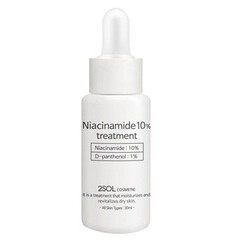
Niacinamide (vitamin B3) doesn't inhibit melanin synthesis directly — instead, it works by blocking the transfer of melanosomes (melanin-containing organelles) from melanocytes to surrounding keratinocytes. This makes it an excellent pairing ingredient with synthesis inhibitors. At 5–10% concentration, it consistently reduces the appearance of dark spots over 8–12 weeks. It's also anti-inflammatory, which addresses the upstream trigger for PIH.
Azelaic acid deserves far more attention than it gets. At 15–20% (prescription strength in many markets), it selectively inhibits tyrosinase in abnormally active melanocytes while leaving normal cells relatively unaffected. This makes it one of the safest brightening actives for darker skin tones, where the risk of post-inflammatory hypopigmentation from aggressive actives is a real concern. The EU permits up to 15% OTC; Australian formulations can reach 20%.
Chemical Exfoliants: The Accelerators
Chemical exfoliants don't directly block melanin synthesis, but they significantly accelerate the clearance of pigmented cells from the skin surface. Used consistently, they are often the difference between a brightening routine that stalls and one that actually delivers visible results.
Alpha hydroxy acids (AHAs) — particularly glycolic acid and mandelic acid — work by dissolving the bonds between surface skin cells, speeding up the natural desquamation process. Glycolic acid, due to its small molecular weight, penetrates deepest and produces the fastest results. It also upregulates collagen synthesis, which improves skin texture alongside tone. Mandelic acid is larger, penetrates more slowly, and is therefore better tolerated by sensitive or reactive skin types.
Beta hydroxy acids (BHAs), primarily salicylic acid, are oil-soluble and work within the pore — making them less directly targeted at surface pigmentation but highly relevant when PIH originates from acne. Reducing active breakouts reduces the formation of new dark marks, while the exfoliating action helps clear existing ones.
Polyhydroxy acids (PHAs) like gluconolactone and lactobionic acid offer a gentler alternative to AHAs with comparable exfoliating effects. They're too large to penetrate beyond the outermost skin layers, which actually makes them excellent for sensitive, rosacea-prone, or compromised skin barriers. They also act as humectants.
When building a routine with exfoliants, frequency matters more than concentration. Two to three times per week with a well-formulated 10% AHA will outperform daily use of a lower-concentration formula, and will cause significantly less cumulative irritation than daily use at high strength.
What Doesn't Work (Despite the Marketing)
The brightening ingredient market is saturated with ingredients that have compelling-sounding mechanisms but insufficient evidence for meaningful clinical results at OTC concentrations.
Arbutin (alpha and beta forms) is a glycosylated form of hydroquinone that slowly releases it in the skin. The issue is concentration: at the 1–2% levels typically found in OTC products, the effective hydroquinone release is negligible. Higher concentrations (above 7%) may be meaningful, but most consumer products don't disclose levels or use doses far too low to matter.
Licorice root extract is frequently cited for its glabridin content, a polyphenol shown to inhibit tyrosinase. In vitro studies look promising, but in vivo evidence at concentrations used in cosmetics is thin. It may contribute to a formula's efficacy but shouldn't be relied upon as a standalone treatment.
Mulberry extract, bearberry, and various botanical brighteners fall into the same category: mechanistically plausible, evidentially underwhelming at practical concentrations. They're harmless — and may provide minor additive benefit in a multi-ingredient formula — but if you're treating established pigmentation, these shouldn't be your primary actives.
The most important thing you can do for hyperpigmentation costs next to nothing: wear SPF 30 or higher every single day, regardless of weather or time of year. UV exposure both triggers and perpetuates all forms of hyperpigmentation. Every brightening active you apply is actively undermined by unprotected sun exposure. This isn't a metaphor — there are controlled studies showing brightening products produce no visible improvement in patients who don't wear sunscreen consistently.
Building a Routine That Actually Works
The principles for a hyperpigmentation-focused routine: pick one or two evidence-based actives, layer them correctly, use them consistently for at least 12 weeks before evaluating, and anchor everything with SPF.
A practical morning routine might include a gentle cleanser, a niacinamide serum (5–10%), a vitamin C serum (ideally applied under moisturiser for stability), and SPF 30–50. Both niacinamide and vitamin C are generally compatible when used together, though some older literature suggested interaction — modern formulations stabilise both adequately.
Evening is where stronger actives belong. A retinoid two to three nights per week, or daily for those who have built tolerance. On retinoid-off nights, an AHA exfoliant (once to twice per week total, not every night). Layer actives from thinnest to thickest, and allow each to absorb before the next.
Expect initial slow progress. Pigmentation in the epidermis fades in weeks to months; pigmentation in the dermis (seen as grey or blue-toned marks) takes significantly longer and may require professional treatment. Patience and consistency are the variables that most reliably separate people who see results from those who don't.
Finally, address new inflammation immediately. Treating active breakouts, eczema flares, or irritation quickly reduces the window during which post-inflammatory hyperpigmentation can form. Prevention is always more efficient than treatment.