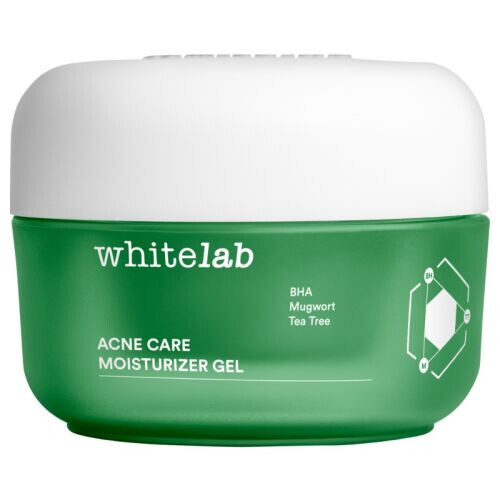
Contains Regulated Ingredients
EU Restricted Ingredients
These ingredients are permitted in the EU but subject to concentration limits, usage conditions, or mandatory labelling requirements under Annex III of the EU Cosmetics Regulation.
Salicylic AcidMax 3.0%
Max concentration:3.0%
Product types:(a) Rinse-off hair products(b) Other products except body lotion, eye shadow, mascara, eyeliner, lipstick, roll-on deodorant(c) Body lotion, eye shadow, mascara, eyeliner, lipstick, roll-on deodorant
Conditions:(a) (b) (c)Not to be used in preparations for children under 3 years of age. Not to be used in applications that may lead to exposure of the end-user’s lungs by inhalation. Not to be used in oral products. For purposes other than inhibiting the development of micro-organisms in the product. This purpose has to be apparent from the presentation of the product.These levels are inclusive of any use of salicylic acid.
Label warnings: (a) (b) (c)Not to be used for children under 3 years of age** Solely for products which might be used for children under 3 years of age.
Zinc GluconateMax 72.0%
Max concentration:72.0%
Product types:(a) Toothpaste intended for users above 1 year of age(b) Toothpaste intended for children between 6 months and 1 year of age(c) Mouthwash intended for users above 6 years of age(d) Other products
O-Cymen-5-OlMax 0.1%
Max concentration:0.1%
What does "EU Restricted" mean?
Restricted ingredients are not banned — they are allowed in cosmetic products as long as specific conditions are met:
- Concentration limits — maximum allowed percentage in the final product
- Product type restrictions — some ingredients are only allowed in rinse-off or leave-on products
- pH restrictions — the finished product must stay within a specific pH range
- Mandatory labelling — certain allergens must be listed on the packaging
- Usage conditions — must not be combined with certain other ingredients
These limits are based on the EU CosIng database (Annex III) and are updated regularly. Products sold in the EU must comply with all applicable restrictions.
Ingredient Chemistry
pH Efficacy
pH Efficacy
5.0
0Neutral 714
Salicylic Acid is at pH 5, which is too high for optimal efficacy (3–4).
Glycolic Acid is at pH 5, which is too high for optimal efficacy (3–4).
Detected actives & ideal pH
Salicylic AcidpH 3–4
Glycolic AcidpH 3–4
Microbiome
Composition & Ethics
Product Details
Attributes
Ethics
VeganLikely
No animal-derived ingredients detected
Cruelty-FreeUnknown
No brand statement — contact manufacturer
Safety
Fragrance-FreeLikely
No fragrance ingredients detected
Confirmed Inferred Unknown Not compliant
Composition
19 natural 1 unknown 14 synthetic
Based on 34 ingredients analyzed. 56% natural, 3% unknown and 41% synthetic.
Preservatives3 preservatives
Silicones1 silicone
Functions Overview (15)
skin conditioning7:Centella Asiatica (Leaf) Extract, Artemisia Vulgaris Extract, Hamamelis Virginiana(Leaf) Extract, Dipotassium Glycyrrhizate, Zinc Gluconate, Melaleuca Alternifolia Leaf Extract, Bacillus/Folic Acid Ferment Filtrate Extract
type of chemical entity7:Allantoin, Panthenol, Sodium Hyaluronate, Triethanolamine, Ethylhexylglycerin, Citric Acid, Potassium Sorbate
Texture & Feel
Texture & Feel
Expected texture
Grainy scrub or thin chemical liquid — physical exfoliants feel gritty, chemical ones feel like water
SpreadabilityVery easy
AbsorptionVery fast
Tackiness / ResidueVery low
Finish:Smooth, refined — skin feels polished after rinsing
Gritty (physical) or tingling (chemical) — exfoliation sensation on skin. Silicones create a smooth, velvety "slip" with a blurring sensory effect. Slight initial tackiness that fades into a hydrated dewy finish.