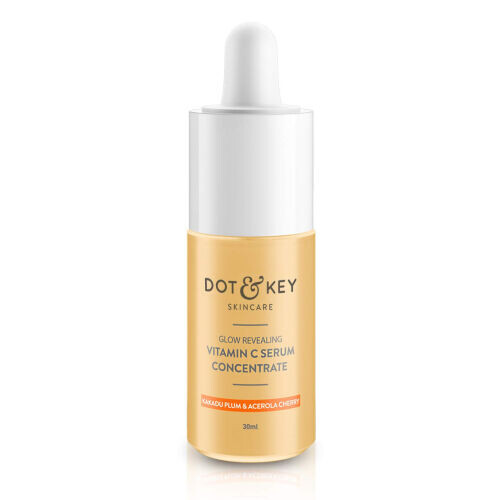
Contains Regulated Ingredients
EU Restricted Ingredients
These ingredients are permitted in the EU but subject to concentration limits, usage conditions, or mandatory labelling requirements under Annex III of the EU Cosmetics Regulation.
ArbutinMax 7.0%
Max concentration:7.0%
Product types:Face cream
Conditions:Hydroquinone levels shall remain as low as possible in formulations containing alpha-Arbutin and shall not be higher than the unavoidable trace level.From 1 February 2025 cosmetic products containing that substance and not complying with the conditions shall not be placed on the Union market. From 1 November 2025 cosmetic products containing that substance and not complying with the conditions shall not be made available on the Union market.
Sodium BenzoateMax a) 2.5% (acid) | b) 1.7% (acid) | c) 0.5% (acid)
Max concentration:a) 2.5% (acid) | b) 1.7% (acid) | c) 0.5% (acid)
Product types:a) Rinse-off products, except oral care products | b) Oral care products | c) Leave-on products
Sodium MetabisulfiteMax 0.2% (as free SO2)
Max concentration:0.2% (as free SO2)
Product types:(a) Oxidative hair dye products(b) Hair straightening products(c) Self-tanning products for the face(d) Other self-tanning products
Conditions:For purposes other than inhibiting the development of micro-organisms in the product. This purpose has to be apparent from the presentation of the product
What does "EU Restricted" mean?
Restricted ingredients are not banned — they are allowed in cosmetic products as long as specific conditions are met:
- Concentration limits — maximum allowed percentage in the final product
- Product type restrictions — some ingredients are only allowed in rinse-off or leave-on products
- pH restrictions — the finished product must stay within a specific pH range
- Mandatory labelling — certain allergens must be listed on the packaging
- Usage conditions — must not be combined with certain other ingredients
These limits are based on the EU CosIng database (Annex III) and are updated regularly. Products sold in the EU must comply with all applicable restrictions.
Ingredient Chemistry
pH Efficacy
pH Efficacy
6.1
0Neutral 714
Detected actives & ideal pH
Alpha-ArbutinpH 4–6.5
Ascorbyl GlucosidepH 5–7
Microbiome
Composition & Ethics
Product Details
Attributes
Ethics
VeganLikely
No animal-derived ingredients detected
Cruelty-FreeUnknown
No brand statement — contact manufacturer
Safety
Fragrance-FreeLikely
No fragrance ingredients detected
Key Actives
Contains Vitamin CConfirmed
Contains vitamin C derivative
Vitamin C SerumConfirmed
Hyaluronic Acid SerumConfirmed
Brightening SerumConfirmed
Confirmed Inferred Unknown Not compliant
Composition
17 natural 2 unknown 13 synthetic
Based on 32 ingredients analyzed. 53% natural, 6% unknown and 41% synthetic.
Active ingredients1 active
Preservatives2 preservatives
Silicones4 silicones
Functions Overview (15)
skin conditioning8:Purified Water, Saxifraga Sarmentosa Extract, Acetyl Tyrosine, Aminopropyl Ascorbyl Phosphate, Arctostaphylos Uva-Ursi Leaf Extract, Magnesium Ascorbyl Phosphate, Methylsilanol Mannuronate, Acerola Cherry Extract
Texture & Feel
Texture & Feel
Expected texture
Viscous, serum-like — slightly "thick water" feel
SpreadabilityVery easy
AbsorptionVery fast
Tackiness / ResidueNone
Finish:Matte velvet — smooth, shine-free, "soft focus"
Silicones create a smooth, velvety "slip" with a blurring sensory effect. Slight initial tackiness that fades into a hydrated dewy finish. Powder-like dry finish typical of "soft focus" pore-blurring primers.