Contains Regulated Ingredients
EU Restricted Ingredients
These ingredients are permitted in the EU but subject to concentration limits, usage conditions, or mandatory labelling requirements under Annex III of the EU Cosmetics Regulation.
Sodium HydroxideMax 5.0%
Max concentration:5.0%
Product types:(a) Nail cuticle solvent(b) Hair straightener(c) pH adjuster for depilatories(d) Other uses as pH adjusterCallosity softener/remover (entry 15d)
Conditions:(b)1. General use2. Professional use(c) up to pH 12.7(d) up to pH 1115 d Contains alcakali, Avoid contact with eyesKeep out of reach of chindren ans Read directions for use carefully
Label warnings: (a) Contains alkali Avoid contact with eyes Can cause blindness Keep out of reach of children(b) 1. Contains alkaliAvoid contact with eyes Can cause blindness Keep out of reach of children2. For professional use only Avoid contact with eyes Can cause blindness(c) Keep out of reach of children Avoid contact with eyes
PhenoxyethanolMax 1.0%
Max concentration:1.0%
Titanium DioxideMax 25.0%
Max concentration:25.0%
Product types:(a) face products in loose powder form(b) hair aerosol spray products(c) other products
Conditions:a) (b) Only in the pigmentary form(c) Not to be used in applications that may lead to exposure of the end-user’s lungs by inhalation
What does "EU Restricted" mean?
Restricted ingredients are not banned — they are allowed in cosmetic products as long as specific conditions are met:
- Concentration limits — maximum allowed percentage in the final product
- Product type restrictions — some ingredients are only allowed in rinse-off or leave-on products
- pH restrictions — the finished product must stay within a specific pH range
- Mandatory labelling — certain allergens must be listed on the packaging
- Usage conditions — must not be combined with certain other ingredients
These limits are based on the EU CosIng database (Annex III) and are updated regularly. Products sold in the EU must comply with all applicable restrictions.
Ingredient Chemistry
pH Efficacy
pH Efficacy
6.1
0Neutral 714
Glycolic Acid is at pH 6.1, which is too high for optimal efficacy (3–4).
Detected actives & ideal pH
Glycolic AcidpH 3–4
Microbiome
Composition & Ethics
Product Details
Attributes
Ethics
VeganLikely
No animal-derived ingredients detected
Cruelty-FreeUnknown
No brand statement — contact manufacturer
Confirmed Inferred Unknown Not compliant
Composition
21 natural 1 unknown 12 synthetic
Based on 34 ingredients analyzed. 62% natural, 3% unknown and 35% synthetic.
Preservatives1 preservative
Silicones2 silicones
Humectants3 humectants
Functions Overview (15)
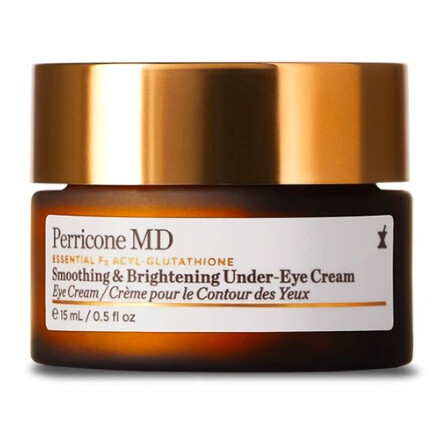
skin conditioning8:Hydrogenated Vegetable Glycerides, Trifluoromethyl C1-4 Alkyl Dimethicone, Butyrospermum Parkii (Shea) Butter, S-Palmitoylglutathione, Salvia Hispanica Seed Oil, Fucus Vesiculosus Extract, Hexylene Glycol, Caprylyl Glycol
emollient6:Octyldodecyl Neopentanoate, Dimethicone, Butyrospermum Parkii (Shea) Butter, Macadamia Ternifolia Seed Oil, Linum Usitatissimum (Linseed) Seed Oil, Helianthus Annuus (Sunflower) Seed Oil
type of chemical entity5:Glyceryl Stearate, Ethylhexylglycerin, Disodium EDTA, Sodium Hydroxide, Silica
Texture & Feel
Texture & Feel
Expected texture
Lightweight gel-cream — silky, designed for the delicate eye area
SpreadabilityVery easy
AbsorptionFast
Tackiness / ResidueVery low
Finish:Silky, lightweight — designed to absorb without pulling
Silicone-smooth or gel-light — designed for the thinnest skin on the face. Silicones create a smooth, velvety "slip" with a blurring sensory effect. Slight initial tackiness that fades into a hydrated dewy finish.