6 PROHIBITED
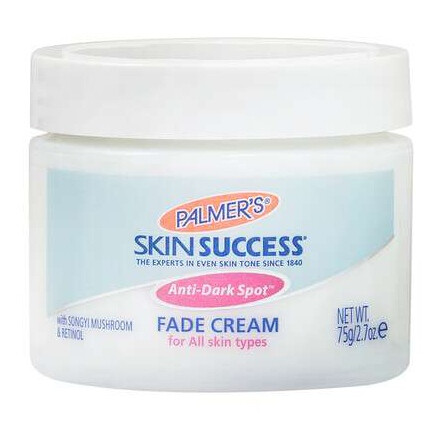
Skin Success Anti-Dark Spot Fade Cream
Contains Prohibited Substances
❌ 2 prohibited🔶 6 restricted
View details
❌ Prohibited (Annex II) — 2
- 2-(4-tert-butylbenzyl) propionaldehyde
- 3 and 4-(4-Hydroxy-4-methylpentyl)cyclohex-3-ene-1-carbaldehyde
Ingredient composition · 38 total
Safe (3)Restricted (6)Prohibited (3)Unknown (26)
Composition
18% natural27% synthetic
🌿 7 natural❓ 21 unknown origin🧪 10 synthetic
Based on 38 ingredients analyzed. 18% natural, 55% unknown origin and 27% synthetic.
Ingredients data:35 / 38explained
6 prohibited (EU Annex II)
6 restricted (EU Annex III)
8 need review
Ingredient Analysis
Goodies
Proven actives & beneficial ingredients
Water
Niacinamide
Butylene Glycol
Base Formula
Main ingredients by concentration
Water#1
Niacinamide#5
Ingredients List
Showing 5 of 38 ingredients
Ingredients Explained
38 / 38Safe — well-studied, low concernNeutral / Unknown — limited dataConcern — high comedogenic/irritancy
⚠️6 of 38 ingredients missing description or function
Water#1
Solvent
The most common cosmetic ingredient. Acts as a solvent and helps dissolve other ingredients.
Glyceryl Stearate#2
type of chemical entity
chemical compound
Mineral Oil#3
Mineral Oil is a cosmetic ingredient used in this formulation.
No descriptionNo function
Stearyl Stearate#4
SKIN CONDITIONING, SKIN CONDITIONING - EMOLLIENT, VISCOSITY CONTROLLING
Octadecyl stearate
Niacinamide#5
Skin Conditioning
Niacinamide, or as us normal people call it vitamin B3, is a real skincare superstar that has had so many studies and has so many skin benefits that we…
Propylene Glycol#6
group of stereoisomers
pair of enantiomers
Cetearyl Alcohol#7
mixture
mixture of fatty alcohols
PEG-75 Lanolin#8
SKIN CONDITIONING - EMOLLIENT, SURFACTANT - CLEANSING, SURFACTANT - EMULSIFYING
Lanolin, ethoxylated (75 mol EO average molar ratio)
PEG-100 Stearate#9
SURFACTANT - CLEANSING
Poly(oxy-1,2-ethanediyl), .alpha.-(1-oxooctadecyl)-.omega.-hydroxy- (100 mol EO average molar ratio)
Ceteareth-20#10
CLEANSING, SURFACTANT - CLEANSING, SURFACTANT - EMULSIFYING
C16-18 alcohols, ethoxylated (20 mol EO average molar ratio)
Dimethicone#11
Emollient
A silicone that forms a protective barrier on the skin.
Isopropyl Myristate#12
type of chemical entity
chemical compound
Retinol#13⚠️ Restricted
SKIN CONDITIONING, SKIN CONDITIONING - MISCELLANEOUS
If you like to read about skincare (and if you are here, it seems that you do :)), we are sure that you have already read a lot about retinol. It is the...
Tricholoma Matsutake Extract#14
SKIN CONDITIONING
Tricholoma Matsutake Extract is an extract of the Mushroom, Tricholoma Matsutake
Ascorbyl Glucoside#15
ANTIOXIDANT
2-O-alpha-D-Glucopyranosyl-L-ascorbic acid
Tocopheryl Acetate#16
type of chemical entity
chemical compound
Ethylhexyl Salicylate#17
LIGHT STABILIZER, UV ABSORBER, UV FILTER
2-Ethylhexyl salicylate
Leuconostoc/Radish Root Ferment Filtrate#18
Leuconostoc/Radish Root Ferment Filtrate is a cosmetic ingredient used in this formulation.
No descriptionNo function
Citric Acid#19
type of chemical entity
weak organic acid
Disodium EDTA#20
type of chemical entity
chemical compound
Butylene Glycol#21
Humectant
A humectant and solvent that helps ingredients penetrate the skin.
Magnesium Aluminum Silicate#22
ABSORBENT, ANTICAKING, OPACIFYING, VISCOSITY CONTROLLING
Silicic acid, aluminum magnesium salt
Xanthan Gum#23
gum
food additive and thickener
Caprylic/Capric Triglyceride#24
Caprylic/Capric Triglyceride is a cosmetic ingredient used in this formulation.
No descriptionNo function
Sodium Sulfite#25
Sodium sulphite
No function
Sodium Metabisulfite#26
Disodium disulphite
No function
Sodium Lauryl Sulfate#27
CLEANSING, DENATURANT, FOAMING, SURFACTANT - CLEANSING, SURFACTANT - EMULSIFYING
Sodium dodecyl sulphate
BHT#28
ANTIOXIDANT, FRAGRANCE
2,6-Di-tert-butyl-p-cresol
Phenoxyethanol#29
Preservative
A common preservative that is generally well-tolerated by most skin types.
Ethylhexylglycerin#30
type of chemical entity
chemical compound
Fragrance#31
Fragrance
A catch-all term that can refer to dozens of different chemicals. Common cause of allergic reactions.
Citronellol#32⚠️ Restricted
group of stereoisomers
pair of enantiomers
Hydroxycitronellal#33⚠️ Restricted
type of chemical entity
chemical compound
Butylphenyl Methylpropional#34🚫 Prohibited
type of chemical entity
chemical compound
Linalool#35⚠️ Restricted
Fragrance
A naturally occurring terpene alcohol found in many flowers and spice plants. Can cause allergic reactions.
Hydroxyisohexyl 3-Cyclohexene Carboxaldehyde#36🚫 Prohibited
3-Cyclohexene-1-Carboxaldehyde, 4-(4-Hydroxy-4-Methylpentyl)-; 3-(4-Hydroxy-4-methylpentyl)cyclohex-3-enecarbaldehyde
No function
Limonene#37⚠️ Restricted
Fragrance
A common fragrance ingredient derived from citrus fruits. Can be irritating to sensitive skin.
Alpha-Isomethyl Ionone#38⚠️ Restricted
PERFUMING, SKIN CONDITIONING
3-Methyl-4-(2,6,6-trimethyl-2-cyclohexenyl)-3-buten-2-one; Methyl-gamma-ionone; gamma-Methylionone
You might also like