2 PROHIBITED
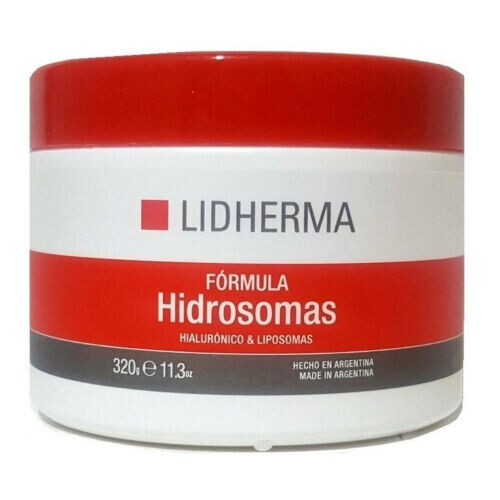
Hidrosomas
Contains Prohibited Substances
❌ 2 prohibited🔶 6 restricted
View details
❌ Prohibited (Annex II) — 2
- 2-(4-tert-butylbenzyl) propionaldehyde
- 3 and 4-(4-Hydroxy-4-methylpentyl)cyclohex-3-ene-1-carbaldehyde
Ingredient composition · 23 total
Safe (2)Restricted (3)Prohibited (2)Unknown (16)
Composition
13% natural30% synthetic
🌿 3 natural❓ 13 unknown origin🧪 7 synthetic
Based on 23 ingredients analyzed. 13% natural, 57% unknown origin and 30% synthetic.
Ingredients data:20 / 23explained
2 prohibited (EU Annex II)
3 restricted (EU Annex III)
5 need review
Ingredient Analysis
Goodies
Proven actives & beneficial ingredients
Glycerin
Hyaluronic Acid
Base Formula
Main ingredients by concentration
Glycerin#4
Ingredients List
Showing 5 of 23 ingredients
Ingredients Explained
23 / 23Safe — well-studied, low concernNeutral / Unknown — limited dataConcern — high comedogenic/irritancy
⚠️4 of 23 ingredients missing description or function
Aqua/Water#1
Aqua/Water is a cosmetic ingredient used in this formulation.
No descriptionNo function
Caprylic/Capric Triglyceride#2
Caprylic/Capric Triglyceride is a cosmetic ingredient used in this formulation.
No descriptionNo function
Propylene Glycol#3
group of stereoisomers
pair of enantiomers
Glycerin#4
Humectant
A powerful humectant that attracts moisture to the skin, keeping it hydrated and soft.
Phospholipids#5
structural class of chemical entities
lipids containing phosphoric acid as a mono- or di-ester
Hyaluronic Acid#6
Humectant
It’s the - sodium form - cousin of the famous NMF, hyaluronic acid (HA). If HA does not tell you anything we have a super detailed, …
Dimethicone#7
Emollient
A silicone that forms a protective barrier on the skin.
Acrylamide/Sodium Acrylate Copolymer#8
Acrylamide/Sodium Acrylate Copolymer is a cosmetic ingredient used in this formulation.
No descriptionNo function
Paraffinum Liquidum#9
ANTISTATIC, SKIN CONDITIONING - EMOLLIENT, SKIN PROTECTING, SOLVENT
Paraffin oils. Liquid hydrocarbons from petroleum
Trideceth-6#10
SURFACTANT - CLEANSING, SURFACTANT - EMULSIFYING
Poly(oxy-1,2-ethanediyl), .alpha.-tridecyl-.omega.-hydroxy; Isotridecanol, ethoxylated
Phenoxyethanol#11
Preservative
A common preservative that is generally well-tolerated by most skin types.
Ethylhexylglycerin#12
type of chemical entity
chemical compound
Fragrance#13
Fragrance
A catch-all term that can refer to dozens of different chemicals. Common cause of allergic reactions.
Citronellol#14⚠️ Restricted
group of stereoisomers
pair of enantiomers
Coumarin#15⚠️ Restricted
PERFUMING
Coumarin; 2H-1-Benzopyran-2-one
Hexyl Cinnamal#16
PERFUMING
2-Phenylmethyleneoctanal; alpha-Hexylcinnamaldehyde; 2-Benzylideneoctanal; alpha-n-hexyl-beta-phenylacrolein
Hydroxycitronellal#17⚠️ Restricted
type of chemical entity
chemical compound
Hydroxyisohexyl 3-Cyclohexene Carboxaldehyde#18
3-Cyclohexene-1-Carboxaldehyde, 4-(4-Hydroxy-4-Methylpentyl)-; 3-(4-Hydroxy-4-methylpentyl)cyclohex-3-enecarbaldehyde
No function
Linalool#19
Fragrance
A naturally occurring terpene alcohol found in many flowers and spice plants. Can cause allergic reactions.
Butylphenyl Methylpropional#20🚫 Prohibited
type of chemical entity
chemical compound
Alpha-Isomethyl Ionone#21
PERFUMING, SKIN CONDITIONING
3-Methyl-4-(2,6,6-trimethyl-2-cyclohexenyl)-3-buten-2-one; Methyl-gamma-ionone; gamma-Methylionone
BHT#22
ANTIOXIDANT, FRAGRANCE
2,6-Di-tert-butyl-p-cresol
EDTA#23
CHELATING
1,2-Ethanediamine, N,N,N',N'-tetrakis(carboxymethyl)-